Rectangular Aperture
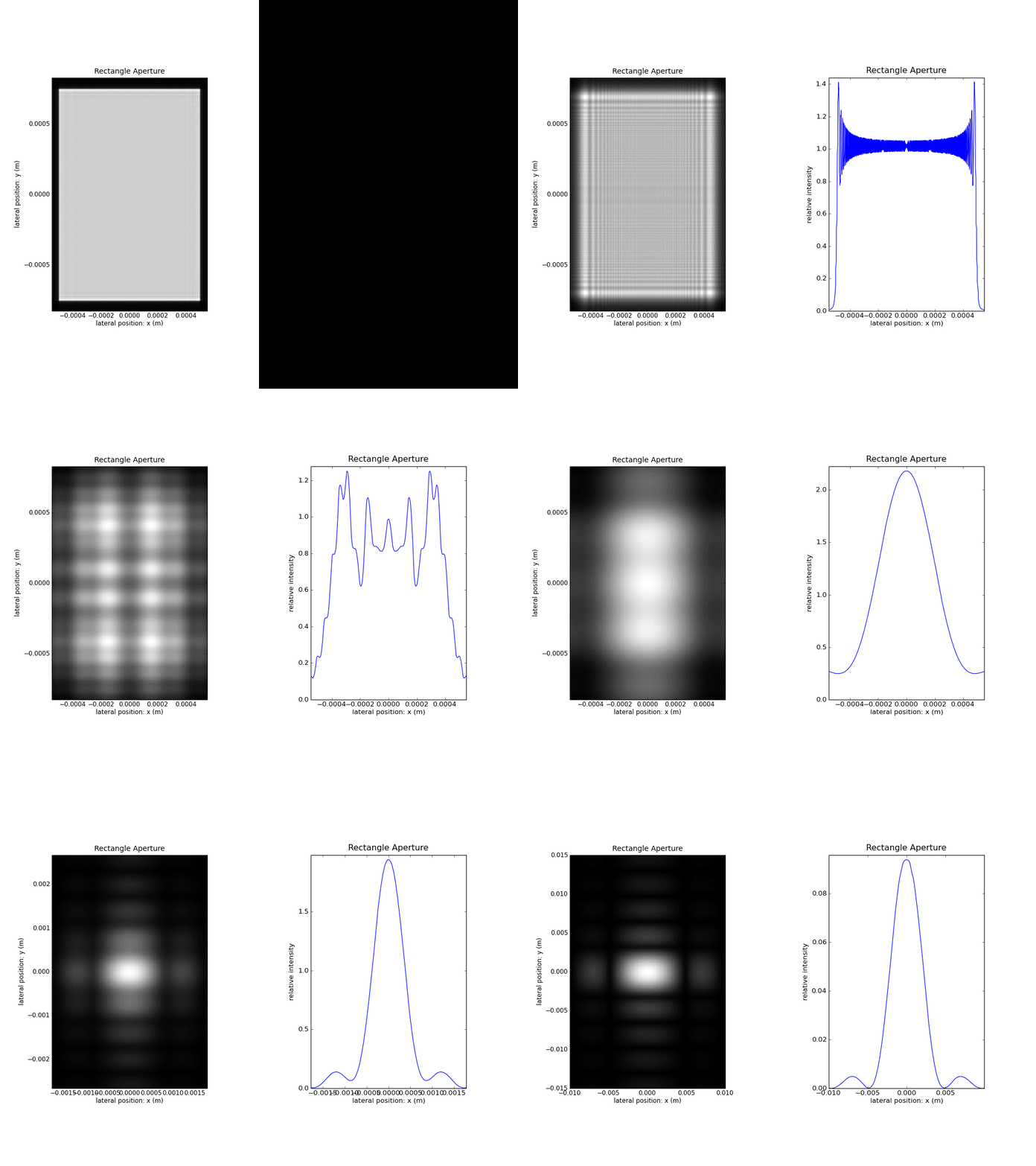
The transition of the diffraction pattern of the rectangle from the nearest, homogenous field to the Fraunhofer regime.
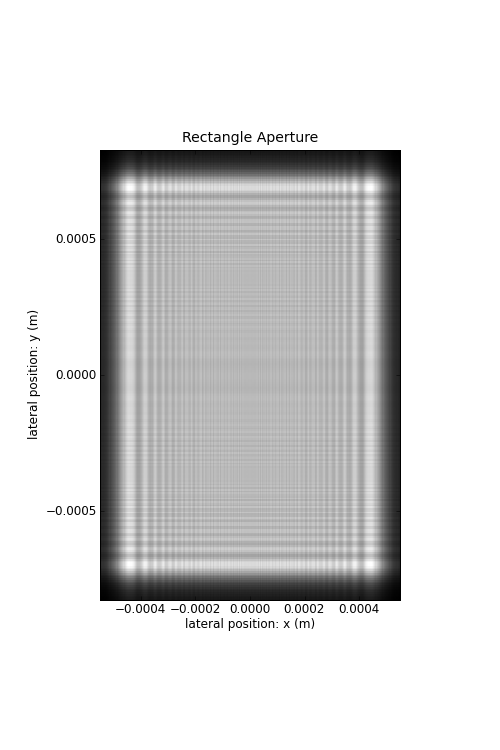
For the first seven pictures, the transversal scale is invariable, only the longitudinal position is increased. From the seventh to the eighth picture the transversal scale range is increased, to show more of the angular diffraction pattern, while that, the longitudinal position is unchanged. In the picture series starting with the eighth picture, both longitudinal and transversal scale are increased simultaneously, keeping now the aspect ratio constant. Therefore the pictures show then an angular picture, with same angles at same position in every picture.
The diagram on the right-hand side shows always a profile through the \(x\) axis of the 2D diagram at \(y = 0\). With increasing depth the pronounciation of the lobes increases, until it reaches the final complete separation in quasi-infinity. Furthermore, notice the high intensity at the edges of the aperture in the nearest field. This effect is known to be typical for diffraction apertures, when one watches at the aperture their edges seem to be brightly glaring.
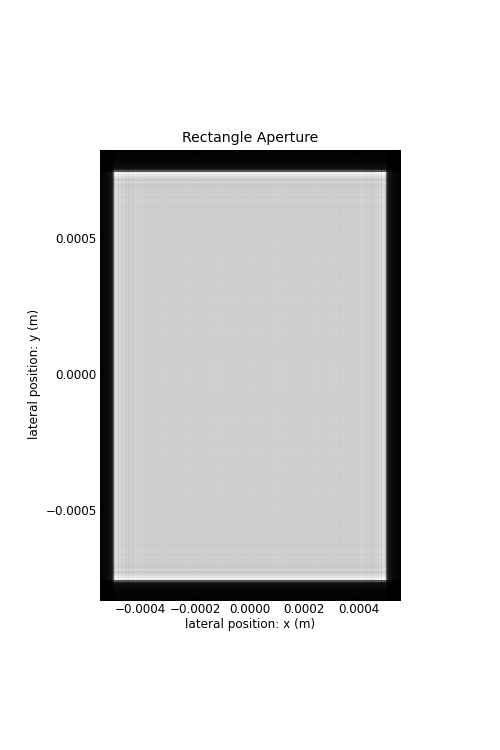
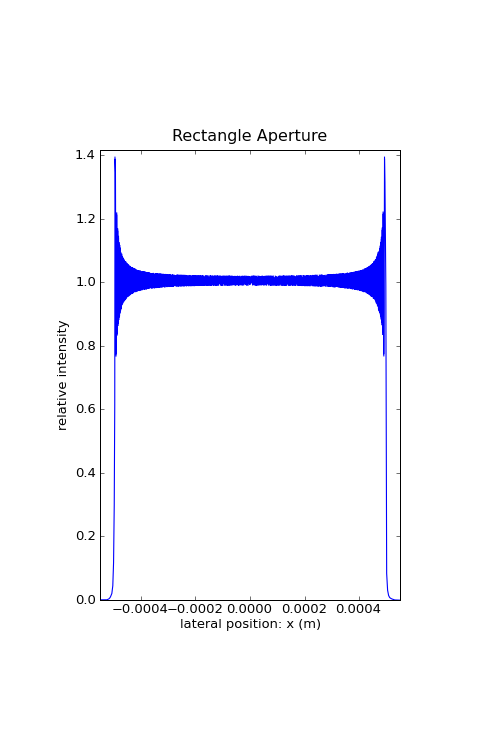
In the nearest field, the illumination is still almost homogenous, cut off at the edges of the aperture, as visible on the left. But the high resolution 1D diagram on the right shows, that when approaching the aperture's edge, the intensity begins to oscillate very rapidly, reaching a final maximum before dropping to zero at the aperture's boundary.
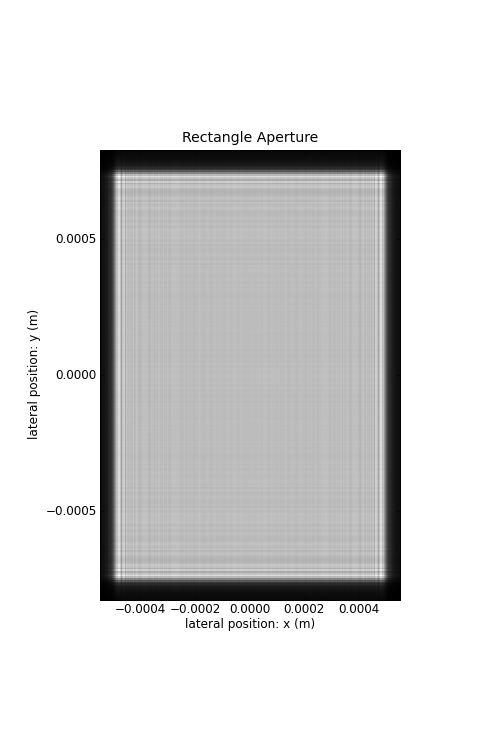
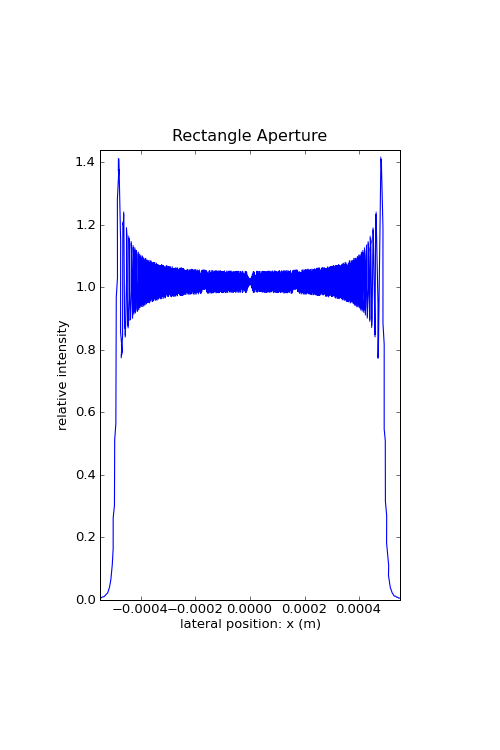
The oscillation becomes less rapid when reaching the aperture's boundary. Its amplitude increases.
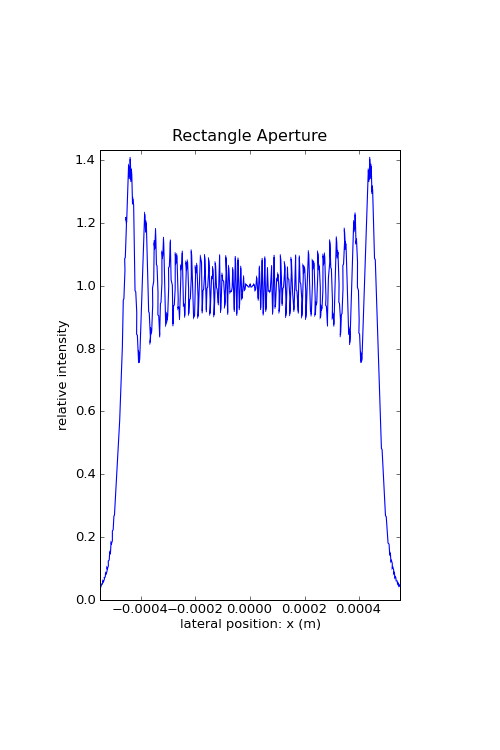
Primary fringes appear prominently, as the frequency of the oscillation drops.
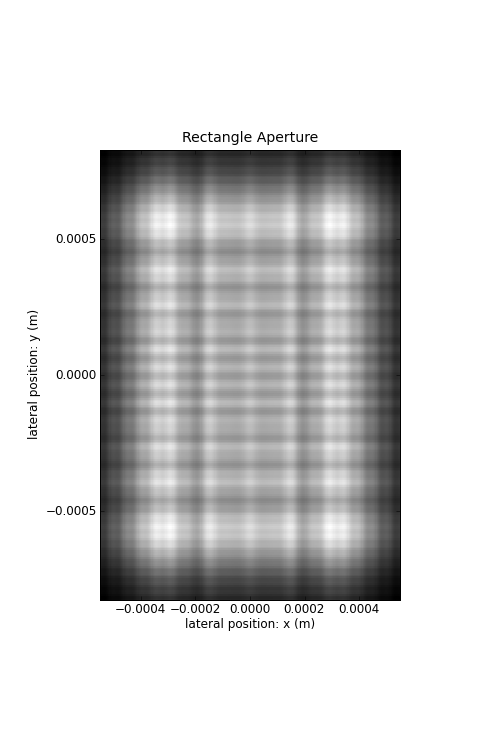
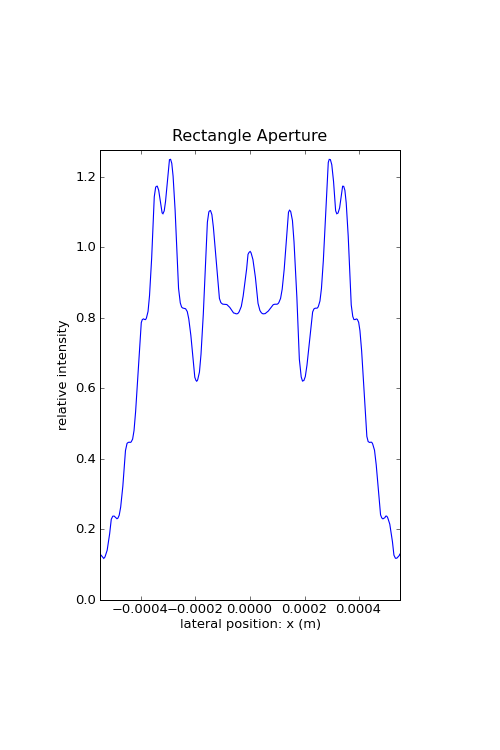
Additionally to the primary fringes of smaller and smaller frequency and increasing amplitude a modulation by secondary fringes shows up.
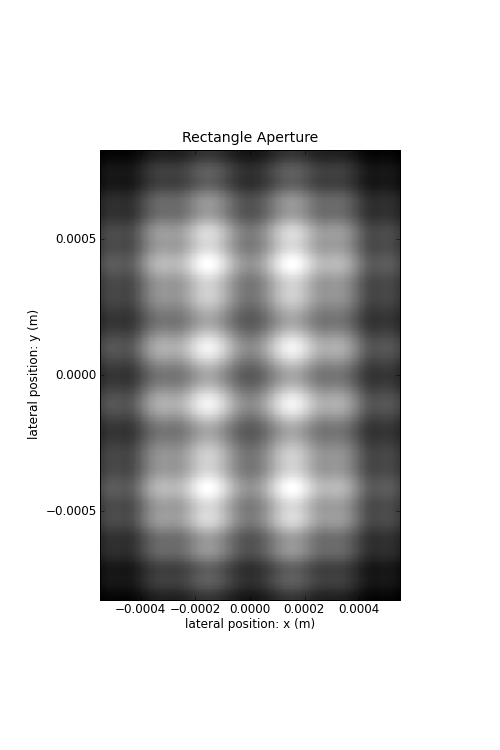
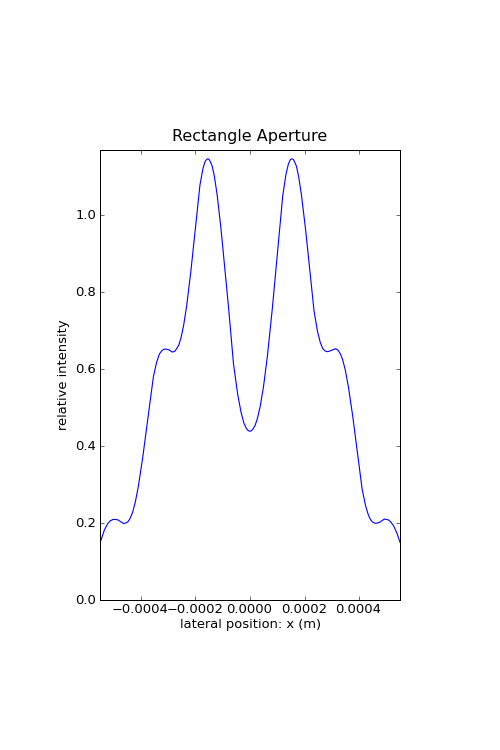
As the frequency drops, only the innermost primary fringes grow and survive.
This page is a fragment.